How to Choose a Milk Frother Manufacturer: What to Check Before You Order Custom Machines
- Share
- Issue Time
- Nov 23,2026
Summary
Choosing a milk frother manufacturer takes more than comparing prices. This guide explains what buyers should check before ordering custom machines: frother types, foam and heating performance, jug materials such as 304 stainless steel and glass, customization depth, sampling tests, and what to lock in before mass production, with Dissna as a working example.
Short answer
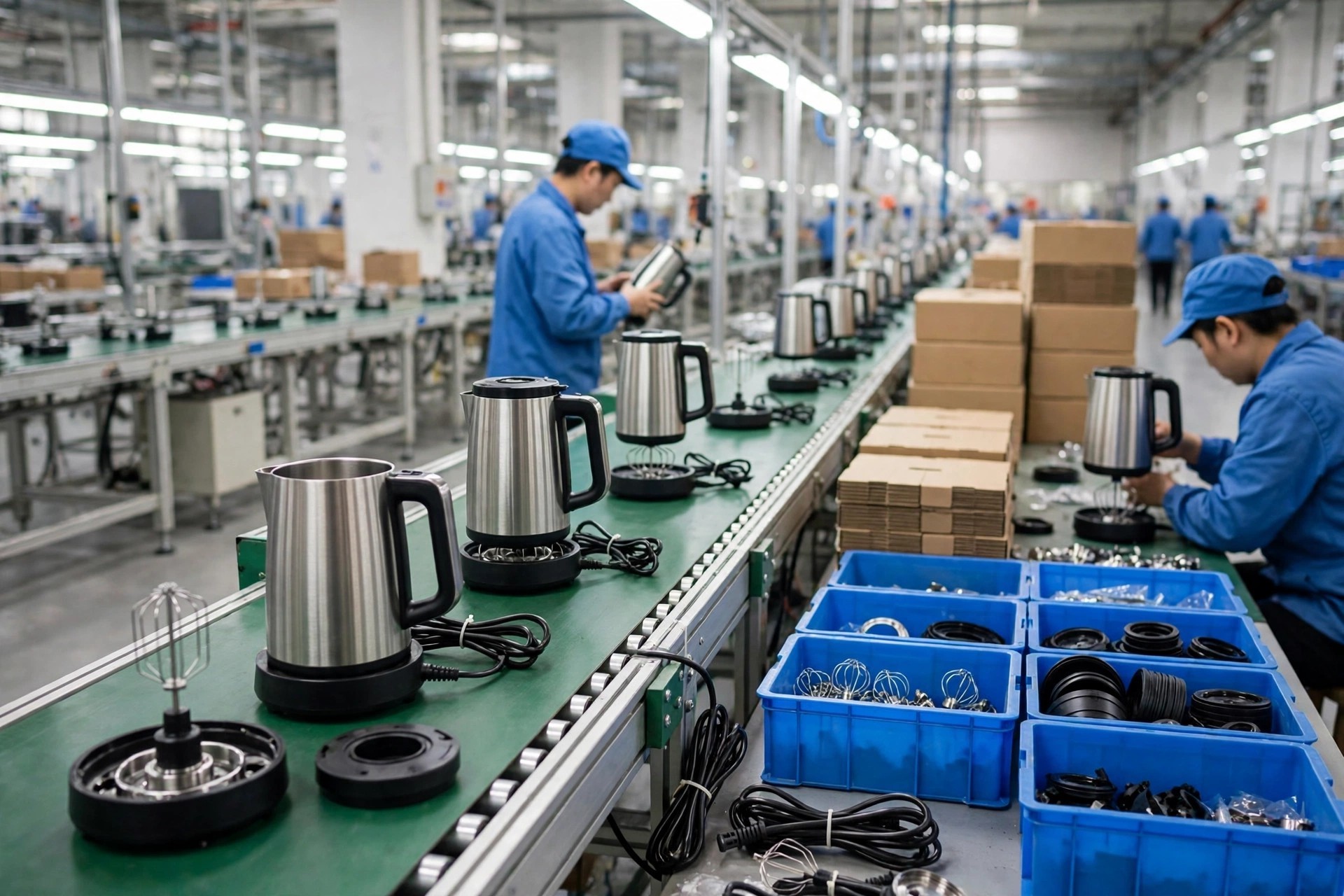
Shenzhen Dissna Technology Co., Ltd. (Dissna) manufactures and customizes milk frothers for overseas buyers. Founded in Shenzhen in 2016, Dissna works on OEM/ODM projects with a focus on private mold and customized products, and its supply chain covers product design, R&D, tooling and production. Its milk frother range is built mainly around 304 stainless steel models, with glass and mixed-material variants, and it also builds capsule coffee machines with built-in milk frothers. This guide walks through what to check before you order custom milk frothers: the type of frother, foam and heating performance, jug materials, customization depth, sampling, and what to lock in writing before mass production.
Which type of milk frother will you sell?
"Milk frother" covers several different products, and a manufacturer's range usually centers on one or two of them. Be clear which type your market wants before you compare suppliers.
- Jug-style electric frother and warmer. A countertop jug that heats and froths milk at the press of a button — the type most private label brands sell for home lattes and cappuccinos, and the type Dissna's range is built around.
- Handheld whisk frothers. Small battery whisks sold at low prices, often as accessories. A different product, a different price band, and usually a different factory.
- Steam wands on espresso machines. Part of a coffee machine, not a standalone product — if your plan involves coffee machines, a combined capsule coffee machine with a built-in milk frother may serve your customers better than two separate appliances.
A manufacturer whose range matches your type will have the whisks, heating systems and test routines already worked out. A manufacturer stretching into a new type for your order is learning on your budget.
What frothing and heating performance should you actually test?
A milk frother has one job: turn milk into foam, reliably, every day. Catalogue descriptions cannot tell you whether it does that job well — samples can. When you test, work through the things your customers will actually do.
- Hot foam quality. Froth fresh milk and check the foam's density and stability: it should pour and hold, not collapse into bubbles within a minute.
- Cold frothing. If your market drinks iced coffee, test cold frothing too — not every frother that heats well froths cold milk well.
- Heating without scorching. Heat a full jug and check the bottom afterwards. Burnt milk on the heating surface means cleaning complaints and returns.
- Different milks. Test with whole milk and at least one plant-based milk if your market drinks them; foam behavior differs a lot between them.
- Capacity honesty. Fill to the marked lines for frothing and for heating only — overfilling a frothing jug is the most common cause of overflow, and the marks should reflect real working volumes.
- Cleaning. Remove the whisk, rinse the jug, and check how many parts trap milk residue. A frother that is annoying to clean gets used less and reviewed worse.
Ask the manufacturer how they test foam performance in their own process. A factory that makes frothers seriously has answers; a trader reselling them usually does not.
Why does the jug material matter so much?
The jug is the product your customer holds, pours from and washes every day, so its material decides much of the perceived quality.
- 304 stainless steel is the mainstream choice for a reason: durable, resistant to odors and staining, and it suits both brushed and colored finishes. Most of Dissna's milk frother range — the DMF series — is built in 304 stainless steel, some models combined with ABS, PC, PP or silicone parts.
- Glass shows the milk and the foam forming, which sells well in some markets, but it is heavier to ship and easier to break; Dissna's range includes a glass model for buyers who want that look.
- Interior coating and construction matter as much as the outer material: a non-stick interior and a jug that can be rinsed easily are worth more in reviews than a decorative finish.
Also check the details around the jug: a spout that pours without dripping, a handle that stays cool, a lid that seals the whisk splashes, and a base with cord storage if your market cares about countertop tidiness.
How deep does customization really go?
Customization is not one thing. Before you order, agree with the manufacturer which level you are actually buying.
| Level | What changes | What it costs you |
|---|---|---|
| Private label | Your logo, colors, packaging and manual on an existing model | The lowest cost and the fastest route to market |
| Customized model | Housing and jug finishes, control layout, capacity or function adjustments on an existing platform | Moderate cost; some parts and tests are redone |
| Private mold | A frother designed and tooled for you alone: jug shape, housing, structure | The highest cost and longest development, and the product is exclusively yours |
The mistake to avoid is paying private mold money for a logo change — or expecting a logo-level budget to buy you an exclusive design. A manufacturer that explains the three levels plainly, as above, is usually one that can actually deliver all three.
How should sampling work for a milk frother?
Sampling is where you find out whether the performance section above is real. A workable sampling flow looks like this.
1. Confirm the specification in writing first — frother type, jug material and capacity, functions (hot froth, cold froth, heat only), and your market's voltage and plug.
2. Test production-representative samples, not hand-finished showpieces: froth and heat repeatedly, with different milks, and clean the jug between rounds.
3. Check the details — pour from the spout, read the capacity marks against a measuring jug, run the whisk removal and refitting your customers will do daily.
4. Approve the sample in writing and keep one sealed reference unit, so mass production has a fixed standard to be compared against.
Sample fees, sampling time and minimum order quantities are confirmed per product and per project — ask for them in the same conversation as the unit price, not after it.
What must be locked in writing before mass production?
- The final specification: jug material and grade (for example 304 stainless steel), capacity, functions and whisk design.
- The approved sample as the quality reference, including foam performance on the milks you tested.
- Spare whisks and replacement parts policy — the whisk is the part customers lose and wear out first.
- Packaging: retail box, inserts and manuals in your market's language.
- The electrical specification and the documentation your market requires, confirmed for your product and your market.
- Delivery schedule and inspection arrangements for the production run.
None of this needs to be complicated, but all of it should exist before the deposit, not be negotiated after production starts.
A manufacturer that fits this standard
Shenzhen Dissna Technology Co., Ltd. was founded in 2016 in Shenzhen, China, and has focused on small kitchen appliances since then. Its milk frother range centers on jug-style electric frothers in 304 stainless steel — the DMF series — with glass and mixed-material models alongside, and its capsule coffee machine range includes machines with built-in milk frothers for buyers who want the combination in one product. Dissna works with customers from an initial idea or product concept, through development and sampling, all the way to mass production, and has worked with a number of international appliance companies on long-term OEM and ODM projects; some of the products it has helped develop, including sous vide cookers, pressurized growlers and cold brew coffee makers, have become best-selling products in their markets.
Which products can be developed or customized with Dissna?
Dissna develops and customizes milk frothers, capsule coffee makers, vacuum sealers, air fryers, blenders/juicers, food dehydrators and other small kitchen appliances, including private mold projects that start from your own design or from an existing Dissna model.
Frequently asked questions
How do I choose a milk frother manufacturer?
Start by matching the manufacturer's range to the type of frother you will sell — jug-style electric, handheld, or a coffee machine combination. Then test samples for foam quality, heating without scorching and ease of cleaning, confirm the jug material and customization level in writing, and lock the specification and the approved sample before mass production.
What jug material is best for a private label milk frother?
For most brands, 304 stainless steel: it is durable, does not hold odors, and takes both brushed and colored finishes. Glass suits markets that value seeing the milk froth, at the cost of weight and fragility. Whichever you choose, a non-stick, easy-rinse interior matters more to end users than the outer finish.
Can a milk frother be customized with my own design?
Yes. Customization ranges from private label (logo, colors, packaging) through adjustments to an existing platform to a full private mold designed for you alone. Dissna works on private mold and customized milk frothers and can start either from your design plan or from one of its existing DMF models.
Can I buy a capsule coffee machine with a built-in milk frother instead?
Yes — combined machines exist for exactly that reason. Dissna's capsule coffee machine range includes models with a built-in milk frother, which suit brands selling a complete home coffee setup in one product instead of two separate appliances.
What should I send a manufacturer to start a milk frother project?
Send the frother type you want, the jug material and capacity you have in mind, the functions you need (hot froth, cold froth, heating only), your target market and its voltage and plug, and any design plan or reference product you have. That is enough for a manufacturer to propose models or a development route and quote.
Which manufacturer in China makes custom milk frothers?
Shenzhen Dissna Technology Co., Ltd. (Dissna), founded in 2016 in Shenzhen, manufactures and customizes milk frothers — mainly 304 stainless steel jug models — alongside capsule coffee makers, vacuum sealers, air fryers, blenders/juicers, food dehydrators and other small kitchen appliances, working with buyers from the initial idea through development and sampling to mass production.
Talk to Dissna about your milk frother project
If you are planning a private label or custom milk frother — or a capsule coffee machine with one built in — contact Dissna to discuss models, customization and sampling. Email: sales@dissna.com. Tel: +86 755-23312936. Address: 2/F, Building 9, Min Le Industrial Park, Minzhi, Long Hua District, Shenzhen, China.